
What power distribution technology is required for first-class urban distribution networks? Learn ab
Power distribution automation is the technical basis of intelligent distribution network, China's power distribution automation started in the 20th century, 90 years, experienced the initial stage, the stage of reflection and the development stage. With the rapid development of China's social economy, electricity as one of the main energy sources to promote the development of the national economy, the people's production and life more and more important, people on the power supply quality requirements are getting higher and higher. In the power system distribution network is the final power will be sent to the production enterprises, each household of the main channel, so the distribution technology in the distribution network applications, with the requirements of people continue to improve. Enhance the resistance of the distribution load, improve the power transmission during the loss of electricity, are on the power distribution technology to improve the requirements.
Due to the lack of investment and attention to the power industry, the lack of management and scientific research, there are some problems in the development of distribution technology, so it is very important to strengthen the innovation and development of distribution technology. Therefore, the distribution network is also the most concentrated development of the power system innovation, most of the distribution network innovation and development are concentrated in the distribution equipment and power distribution system of technological progress, all kinds of new materials, new components and new systems are In continuous testing and pilot applications.
"13th Five-Year" power plan introduced to the field of distribution technology to become the focus of the industry, with the support of national policy, the distribution network ushered in the development of new opportunities, and the construction of the refinement of the deep, distributed energy ratio Rising, the future distribution network technical requirements are also constantly improve. So what are the existing technologies in the distribution network and what new technologies will appear in the future?
Distribution automation The use of modern electronic technology, communication technology, computer and network technology and power equipment and system application technology to achieve the distribution network under normal and accident monitoring, protection, control and measurement functions, and distribution management and organic integration , With the user close interaction, improve the quality of power supply, improve power supply reliability and economy, making enterprise management more efficient. Power distribution automation is to improve the reliability of power supply and power supply quality, expand the power supply capacity, to achieve efficient operation of the distribution network an important means, but also to achieve one of the important foundation of smart grid. Distribution automation in industrial developed countries have nearly four decades of development history, especially in the past 10 years, power distribution automation has become the major power companies to further enhance the quality of customer service and improve the economic benefits of the main content, has become a power grid Modern management of the indispensable part.
In the power distribution technology continues to improve today, the Polaris transmission and distribution network inventory of the current hot distribution technology to share with you.
1. Active distribution network planning technology
The distribution network technology system architecture and its planning operation control technology, which utilizes the controllable resources, realize the active planning, the perception, the management, the control and the service to meet the multi-type distributed power supply access and the demand response.
(1) GIS-based spatial load forecasting technology considering multi-energy complementarity and demand response
(2) intelligent distribution network self-healing power supply mode optimization and electrical reliability evaluation method
(3) substation optimization planning and grid optimization planning method based on asset management and reliability requirements
(4) GIS-based and multi-objective model only distribution network planning platform
2. Self-healing control technology of intelligent distribution network
(1) self-healing control
(2) situational awareness
(3) distributed power / micro-network / flexible load cluster control
(4) voltage and reactive power optimization technology
3. Distribution network situation awareness
Distribution network situational awareness: in a certain time and space scale, the current state of the power grid intuitive and comprehensive perception of the grid situation may cause changes in the various elements of the acquisition, synthesis, prediction and visualization of the future development trend.
Driving force: distribution network operation control needs of the current state of the system have the overall grasp, the need for scheduling and timely staff. To effectively identify and solve the problem, to ensure the reliable operation of the system economy.
4. Power distribution equipment intelligent and flexible power distribution technology
Intelligent power distribution equipment:
(1) digital processing + self-test diagnosis + adaptive control + information interactive communication
(2) Electricity information + noise information + temperature information + weather information …
Flexible distribution technology:
(1) power distribution system power quality related technologies, such as: net reactive power compensator, static synchronous compensator, active filter, dynamic voltage recovery, etc.
(2) solid-state power electronic equipment, such as: power electronic switches, power electronic limiter, power electronic transformers, etc.
(3) flexible power flow control technology, such as: unified power flow controller, power flow switch, distributed power controller, schedulable load controller, micro-grid controller.
5. Application of energy storage in distribution network
(1) load balance: the dynamic load compensation, load tracking, to achieve peak load filling and system backup and other ancillary services; delay distribution network construction investment.
(2) to improve power supply reliability and power quality: to suppress the surge, the compensation voltage drop; inhibit the frequency offset, the three-phase imbalance compensation; backup power.
(3) to promote distributed power supply friendly access: flat distributed wind power, photovoltaic and other output fluctuations.
(4) micro-grid and industrial electricity
6.ICT in intelligent distribution network applications
(1) ICT / large data applications in intelligent distribution networks:
① improve the production and operation efficiency: the rapid point of failure, shorten the repair time
② improve the decision-making information accuracy: the operation of assets analysis, a clear asset investment needs
③ improve customer satisfaction: optimize the power grid structure, improve power supply reliability, provide quality advice
Application of Large Power Data in Distribution Network
① planning: more accurate grasp of the load distribution and changes in the law, improve the load modeling and forecasting level, optimize the distribution network planning and power supply plan.
② material infrastructure: to improve the level of spare parts management, contribute to the project fine management. Improve the level of safety risk management.
③ distribution network operation: to improve the level of wind power / photovoltaic power forecast and load forecast level, improve the distribution network monitoring, protection and ④ control level, improve the fault location to find the level of response to improve the speed of response to improve management and management level and power supply reliability The
⑤ maintenance: the study of the environment, equipment defects, operating conditions such as the impact of equipment status, more accurate equipment assessment and risk assessment.
⑥ business management: improve the behavior of electricity analysis, improve customer demand for electricity and load the level of cognitive level, help to improve the level of customer service differentiation.
⑦ collaboration: to solve cross-business multi-dimensional association analysis, enhance business collaboration and business information integration capabilities.
⑧ customer service: help optimize the allocation of resources to improve customer service capabilities.
(2) ICT / communication technology in the integrated distribution network applications
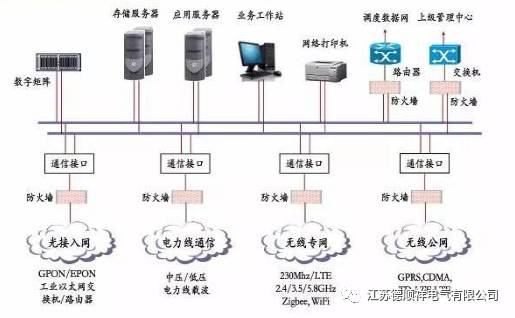
(3) ICT / mobile terminal integrated application in the distribution network
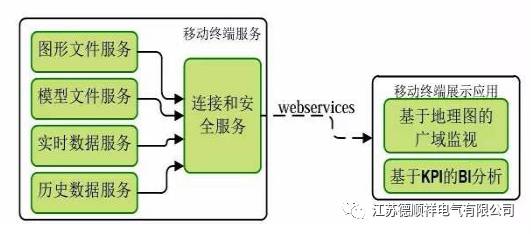
Use the wireless network and mobile devices to understand the distribution network operation profiles and KPI information anytime, anywhere to improve the efficiency and efficiency of distribution network operation and management
7. Distributed power and microgrid technology
Distributed power supply to the distribution network to bring some problems, including power quality. Voltage regulation, protection coordination control and scheduling management.
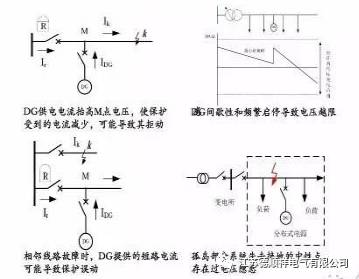
Microgrid Controller:
Common features:
① emergency FM
② dynamic reactive power regulation
③ low-voltage low-frequency load shedding
④ smooth distributed power fluctuations
⑤ contact line power from control
⑥ multi-power system control
⑦ off-grid stability and economic operation
⑧ and off-grid control
⑨ protection and black start
8. DC distribution network technology
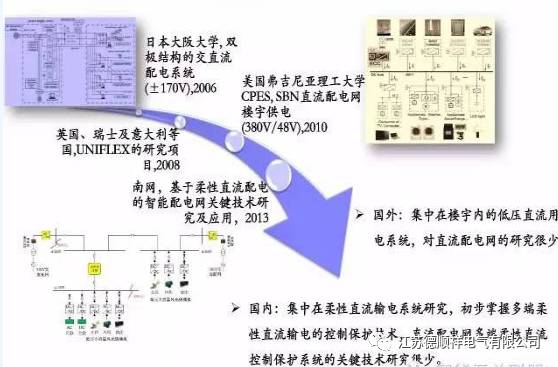
Challenges for current distribution networks:
(1) high-density access to distributed energy and full utilization
(2) important sensitive load of high reliability, high quality power supply
(3) to improve the power supply capacity of the distribution corridor
(4) DC and variable frequency load demand
Status quo at home and abroad
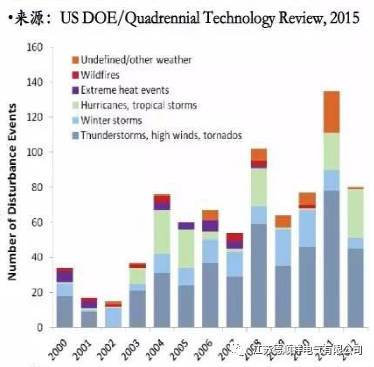
9. Distribution network disaster prevention and mitigation technology
(1) disaster early warning technology (natural disasters, trees, man-made damage, etc.)
(2) Disaster assessment techniques (network assessment, reliability assessment, resource assessment)
(3) system disaster ability to enhance technology (wind and lightning, etc.)
(4) disaster relief resource allocation optimization and emergency support capability upgrading technology
10. Energy Internet technology
Definition: Energy Internet through a number of advanced power electronics technology, information technology and intelligent energy management technology, a large number of distributed energy collection devices and distributed energy storage devices constitute a new type of power network nodes together to achieve energy and information flow Energy peer exchange and sharing network. - National Defense Science and Technology University Energy Internet Research Group
feature:
(1) renewable: mainly to renewable energy
(2) distributed: large-scale distributed energy collection and storage
(3) together: traditionally more concerned about "access"
(4) openness: flat on the other, two-way flow, plug and play
(5) melt into: the integration with the traditional power grid
11. Advanced distribution network automation technology
Power distribution automation on the distribution network of important equipment for continuous monitoring and automatic control, integration of the distribution network monitoring and control system and data acquisition system (SCADA).
Advanced Power Distribution Automation (ADA) includes intelligent sensors, electronic controllers, and two-way communication systems that collect information from important feeders. The ADA system collects and displays voltage, current, active, reactive, device status, operating status, event logs, and other information related to the status of the power distribution system.
The advantage is that the operator can easily control the remote access to the capacitor, the circuit breaker breaking and voltage regulation. Substation Automation If the automatic switch, recloser, capacitor and advanced metering device are installed, the grid can be optimally reconstructed to improve the reliability and technical performance of the system, which can fully utilize the function of the smart grid.
12, intelligent feeder recloser and relay
It is expected that by 2030, 70% of the feeders will be equipped with intelligent relays and reclosers. Replacement of traditional electromechanical relay protection and control equipment with microprocessor-based relays and reclosers at the end of the feeder is the inevitable process for the development of smart grids.
The benefits of intelligent feeder reclosers and relays are as follows:
(1) The measuring instrument can continuously monitor and analyze the measured value, and can process the measurement information in time and calculate the useful data (such as the fault distance to the fault point).
(2) Data that can be measured or calculated by IEDs is transmitted to an external or user through a communication system based on an industry standard protocol.
(3) with self-test capability, so IEDs can detect their own internal failure and promptly notify the staff for maintenance.
(4) can store a variety of operating methods, according to the requirements of the load switch to the best mode of operation.
(5) functional diversification. For example, a relay-protected IED has a fast overcurrent protection, automatic reclosing, feeder protection, as well as the ability to measure and monitor the environment of the device, these functions are integrated into a device, thereby reducing the internal equipment around Line and control panel volume.
13, intelligent line switching technology
It is expected that by 2030 there will be 25% of the distribution network will be installed intelligent line switch. At present, part of the intelligent line open part of the intelligent line switching technology has been applied. These technologies make the distribution network self-healing. At the same time, it also supports the feeder terminal to achieve the optimal grid structure reconfiguration to meet the requirements of distributed generation and load balancing.
Has the following main features:
(1) an industry-standard communication system that supports remote control and data acquisition. The switch also supports point-to-point communication with other intelligent devices such as other smart switches, switched capacitors, distributed power supplies, and so on. A highly reliable communication system is a necessary condition for achieving the above objectives.
(2) Each smart line switch must contain a separate local controller to obtain local data for automatic switching.
(3) The intelligent line switch and the associated controller must support a "two-way" operation that detects the flow of the tide and responds to the flow direction. It is necessary to reconfigure the distribution network feeder (often in the intelligent distribution system) and in the distribution network where the current flow may occur.
(4) Simultaneous support for one-way operation (only for tripping trips) and three-wire operation (tri-phase tripping). If the distributed power plant is downstream of the intelligent line switch (away from the substation), its single-phase trip function will be disabled to avoid damage to the generator.
14, power electronics technology
Power electronics technology can not only provide users with stable power, but also at the same time to achieve the frequency, phase, voltage and other flexible control. Static reactive power compensator, short circuit current limiter is the distribution network of two typical power electronic devices.
Two typical power electronic devices:
(1) static reactive power compensator static synchronous reactive power compensator is the most advanced technology of reactive power compensation device. It is no longer using large-capacity capacitors, inductors to produce reactive power, but through the high-frequency power electronic devices to achieve reactive power compensation technology leap, especially for high-voltage power system in the dynamic reactive power compensation. The stationary synchronous reactive compensator can eliminate the minute power quality disturbance within a cycle. Therefore, it can deal with the power fluctuation DERs (wind power, photovoltaic, etc.) access to the distribution network voltage fluctuations caused by the problem.
(2) short circuit current limiter Another typical example is the short circuit current limiter, often referred to in the country as a fault current limiter. SCCLs technology can be used to deal with the transmission system short circuit current problem. The larger the capacity, the greater the fault current is, and it is likely to exceed the affordability of the operating equipment. SCCL based on power electronics technology can effectively solve this problem. SCCL's core philosophy is: normal operation was zero impedance (or low impedance), short-circuit fault was high impedance, which play a role in limiting short-circuit current.
15, intelligent inverter technology
The inverter is a device that converts DC power into AC power. Inverter is the most complex equipment in photovoltaic power generation system, is the second highest cost of equipment in the system, but also the most vulnerable part of the system. PV panels are generally very strong and reliable, have up to 25 years of service life, and the life of the inverter is generally not more than 10 years.
Small-scale inverter in the application of photovoltaic The current PV system design, all the photovoltaic panels are in series. If a part of the photovoltaic panel is blocked, the power efficiency of the entire system will be reduced. In addition, if the PV module is to be optimally operated, all photovoltaic panels must have the same orientation and tilt, which limits the layout of the roof PV.
In contrast, the future of the photovoltaic power generation system requires each battery board are connected to its own micro-reverse, which can fully tap the power generation potential of each photovoltaic panels to enhance the efficiency of the entire system power generation. Especially when applied to the patchwork roof, the flexibility of the system design is enhanced. With the popularity of PV technology and the increased penetration of PV in the grid, power companies are aggressively promoting intelligent inverters, which, in addition to completing the basic functions of DC-AC conversion, will provide the following ancillary services: low / high Voltage crossing, automatic power generation, automatic discarding, resonance suppression, damping oscillation, grid support …
16, intelligent transformers
Traditional transformers are very inefficient under light loads and have a leak in liquid media, and only a single function of up / down can not provide real-time voltage regulation and system monitoring.
At the same time, they can not provide three-phase power through the single-phase circuit, can not be partially removed by repair. The future distribution transformer will be used as a distributed power supply
16, intelligent transformers
Traditional transformers are very inefficient under light loads and have a leak in liquid media, and only a single function of up / down can not provide real-time voltage regulation and system monitoring.
At the same time, they can not provide three-phase power through the single-phase circuit, can not be partially removed by repair. Future distribution transformers will serve as a distributed power supply interface, access to energy storage, to accept electric vehicles, the use of power electronic devices to replace the traditional distribution transformer equipment.
The American Electric Power Research Institute has developed an intelligent transformer that can be used as a renewable energy grid interface, including a two-way power interface for easy access to photovoltaic, energy storage, electric vehicles, as well as system integration, local control and island control Command and control functions. In addition, EPRI has also developed a medium voltage intelligent universal transformer. The technology replaces independent power converters and traditional transformers, completely abandoning the heavy structure of traditional transformers and a lot of wiring. The versatile IUT provides 400V DC bus voltage for the supply of DC power distribution systems or fast charging for electric vehicles.